
▎What is KPV?
KPV is a natural peptide segment with multiple biological activities. It performs remarkably well in the field of anti-inflammation. By regulating the immune response, it alleviates inflammation, which is of great significance for the treatment of diseases such as inflammatory bowel disease. Meanwhile, KPV has antibacterial effects against pathogens such as Staphylococcus aureus and Candida albicans, helping to reduce infections. In addition, it can accelerate wound healing, promote tissue repair, and improve skin health in the field of cosmetology. KPV has excellent water solubility and biocompatibility. It will not trigger an immune response, and can be naturally degraded by the action of enzymes in the body, ensuring a high level of safety. Its multifunctionality endows it with broad application prospects in multiple fields, including medicine, cosmetology, and biomaterials.
▎TKPV Structure
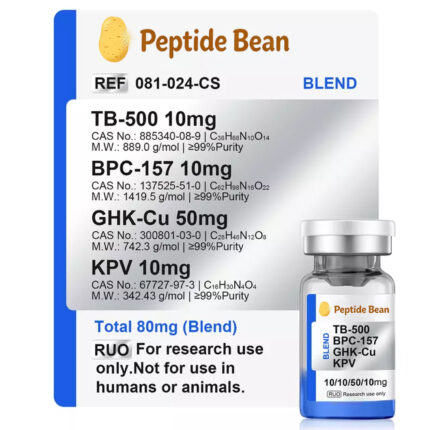
IUPAC Condensed:H-Lys-Pro-Val-OH
Molecular Formula: C16H30N4O4
Molecular Weight: 342.43g/mol
CAS Number: 67727-97-3
PubChem CID: 125672
Synonyms: Msh (11-13);alpha-Msh (11-13);ACTH-(11-13)
▎KPV Research
What is the research background of KPV?
KPV is a tripeptide derived from α-melanocyte-stimulating hormone (α-MSH). α-MSH is a polypeptide hormone with multiple biological functions, playing an important role in regulating skin pigmentation, immune regulation, and other aspects. As a part of α-MSH, KPV has been isolated and deeply studied. Although some progress has been made in the medical field in recent years, the treatment options for inflammatory bowel disease (IBD) are still unsatisfactory, and the surgery rate remains high. Therefore, finding new and effective treatment methods has become an urgent task. IBD includes ulcerative colitis, Crohn’s disease, etc., which are characterized by chronic intestinal inflammation and seriously affect the quality of life of patients. Current treatment methods include drug therapy and surgical treatment, but both have certain limitations. In recent years, the anti-inflammatory effects of melanocortin peptides such as α-MSH have been described in dextran sulfate sodium (DSS) colitis in mice. This provides a clue for studying the anti-inflammatory potential of KPV. α-MSH has functions such as immune regulation and inflammation alleviation, and the tripeptide KPV derived from it is also considered to possibly have similar anti-inflammatory properties.
What is the mechanism of action of KPV?
Mechanism of action in ulcerative colitis
Improving stability and rectal administration convenience:
KPV (Lys-Pro-Val) is a tripeptide derived from α-MSH (α-melanocyte-stimulating hormone) and has anti-inflammatory effects against colitis. However, the KPV solution is very unstable during rectal administration, affecting its therapeutic effect. In the study, cysteamine-grafted γ-polyglutamic acid (SH-PGA) was synthesized by combining cysteamine with the carboxyl group of γ-PGA. Without using a cross-linking agent, a 4% polymer content SH-PGA hydrogel was formed through the self-cross-linking of sulfhydryl groups. The KPV/SH-PGA hydrogel showed an elastic modulus (G’) higher than the corresponding viscous modulus (G”) at 0.01-10 Hz, exhibiting good mechanical stability and shear thinning behavior, which is beneficial for rectal administration. At the same time, the stability of KPV in the SH-PGA hydrogel was significantly enhanced. Only 30% of KPV was released from the KPV/SH-PGA hydrogel within 20 minutes, followed by a continuous release behavior[1].
Alleviating colitis symptoms:
Through experiments on rats with ulcerative colitis induced by 2,4,6-trinitrobenzene sulfonic acid (TNBS), the enhanced therapeutic effect of the KPV/SH-PGA hydrogel on colitis was confirmed. After rectal administration of the KPV/SH-PGA hydrogel, colitis symptoms including weight loss and disease activity index scores were significantly alleviated. In addition, treatment with the KPV/SH-PGA hydrogel prevented the shortening of the colon in rats injected with TNBS and reduced the level of colonic myeloperoxidase. After treatment with the KPV/SH-PGA hydrogel, the morphology of the colon, including the epithelial barrier, crypts, and intact goblet cells, was restored. At the same time, the KPV/SH-PGA hydrogel reduced the expression of pro-inflammatory cytokines such as tumor necrosis factor α and interleukin 6[1].
Mechanism of action in mouse models of inflammatory bowel disease
DSS colitis model: In the DSS colitis model, treatment with KPV led to earlier recovery and significantly enhanced weight recovery. Histologically, the inflammatory infiltration in KPV-treated mice was significantly reduced, which was confirmed by the significant decrease in the activity of myeloperoxidase (MPO) in the colonic tissue after KPV treatment[2].
CD45RB (hi) transfer colitis model:
Supporting the above findings, KPV treatment of transferred colitis led to disease recovery, weight recovery, and a reduction in inflammatory changes from a histological perspective[2].
MC1Re/e mouse model:
In mice expressing a non-functional melanocortin-1 receptor (MC1Re/e), KPV treatment saved all animals in the treatment group from death during DSS colitis. This indicates that the anti-inflammatory effect of KPV seems to be at least partially independent of MC1R signaling[2].
Mechanism of action in bronchial epithelial cell inflammation
Inhibiting NF-κB signaling:
In immortalized human bronchial epithelial cells, the melanocortin-related peptide KPV and the agonist α-MSH of airway epithelium (MC3R) inhibited NF-κB signaling by inhibiting the nuclear import of p65RelA and activating epithelial MC3R, respectively. Specifically, the effect of KPV is related to its nuclear import, which can inhibit the nuclear translocation of p65RelA labeled with YFP. At the same time, the binding sites of KPV and Imp-α/β are on p65RelA, possibly involving blocking importin-α armadillo domains 7 and 8 [3].
Mechanism of action in chemotherapy-induced oral mucositis
Antibacterial, anti-inflammatory, and repair effects:
Using temperature-sensitive PLGA-PEG-PLGA (PPP) as the matrix and epigallocatechin-3-gallate (EGCG) with inherent antibacterial activity as the adhesion enhancer, an in-situ mucosal adhesive hydrogel (PPP_E) was successfully prepared. The tripeptide KPV was dissolved in the cold PPP_2% E precursor solution as a model drug to prepare the KPV@PPP_2% E hydrogel. The anti-inflammatory activity and the potential to promote cell migration of KPV in the PPP-2% E hydrogel were well maintained. In addition, the KPV@PPP_2% E had a strong antibacterial effect against Staphylococcus aureus. When the KPV@PPP_2% E hydrogel was applied to the gingival mucosa of rats with chemotherapy-induced oral mucositis, it could rapidly transform into a hydrogel and adhere to the wound surface for 7 hours, greatly improving the food intake and weight recovery of the rats. At the same time, by promoting the expression of CK10 and PCNA, the KPV@PPP_E hydrogel also well repaired the tissue morphology of the ulcerated gingiva. In addition, the KPV@PPP_2% E hydrogel significantly inhibited inflammatory cytokines including IL-1β and TNF-α, and at the same time upregulated IL-10 [4].



Reviews
There are no reviews yet.